Media Center - News
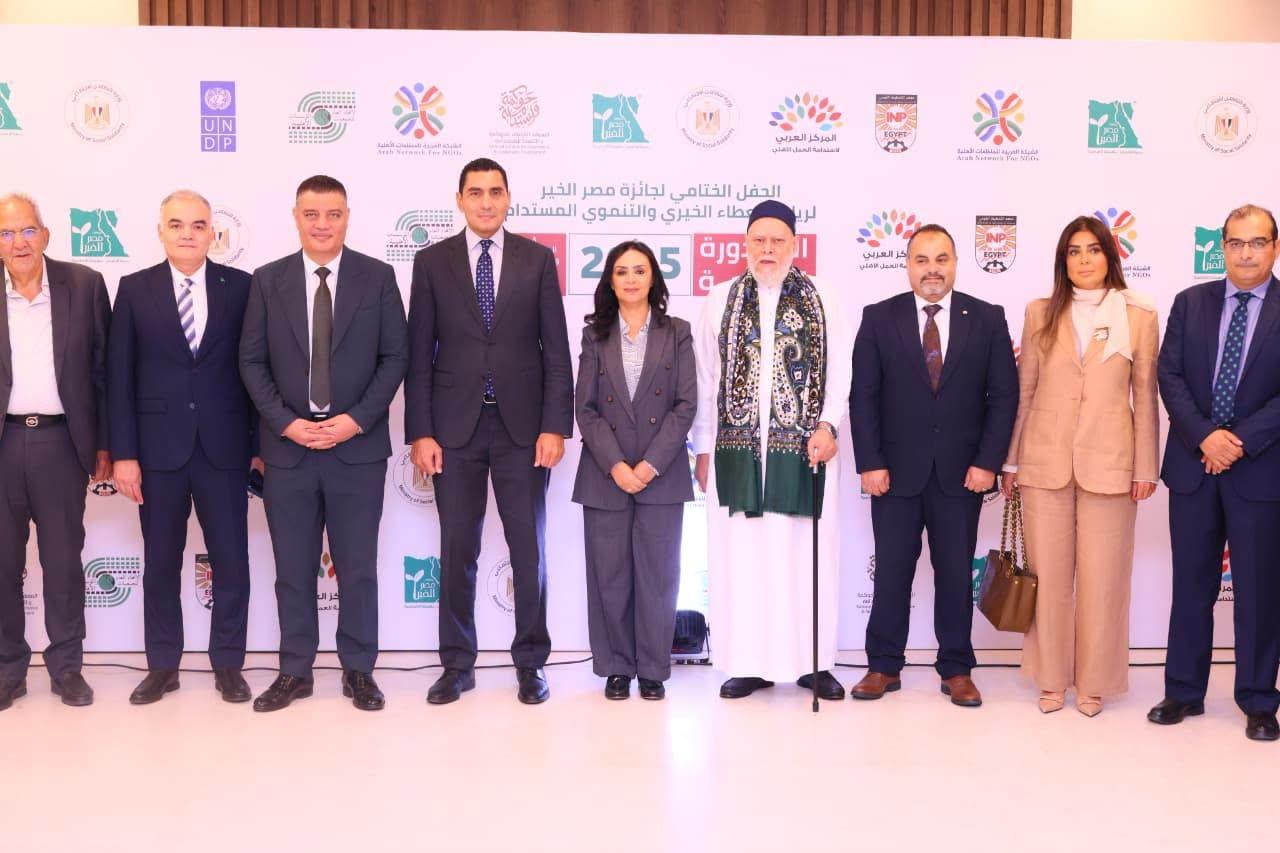
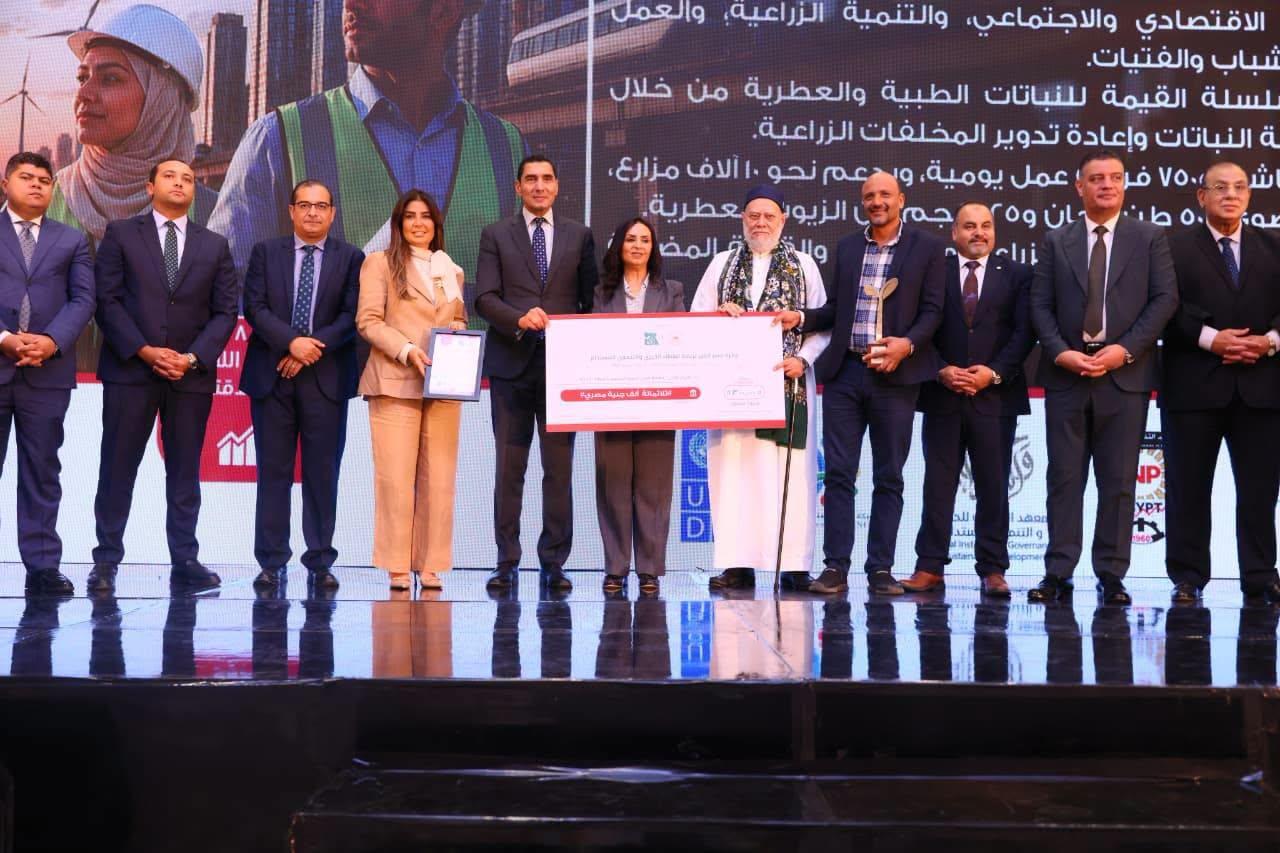
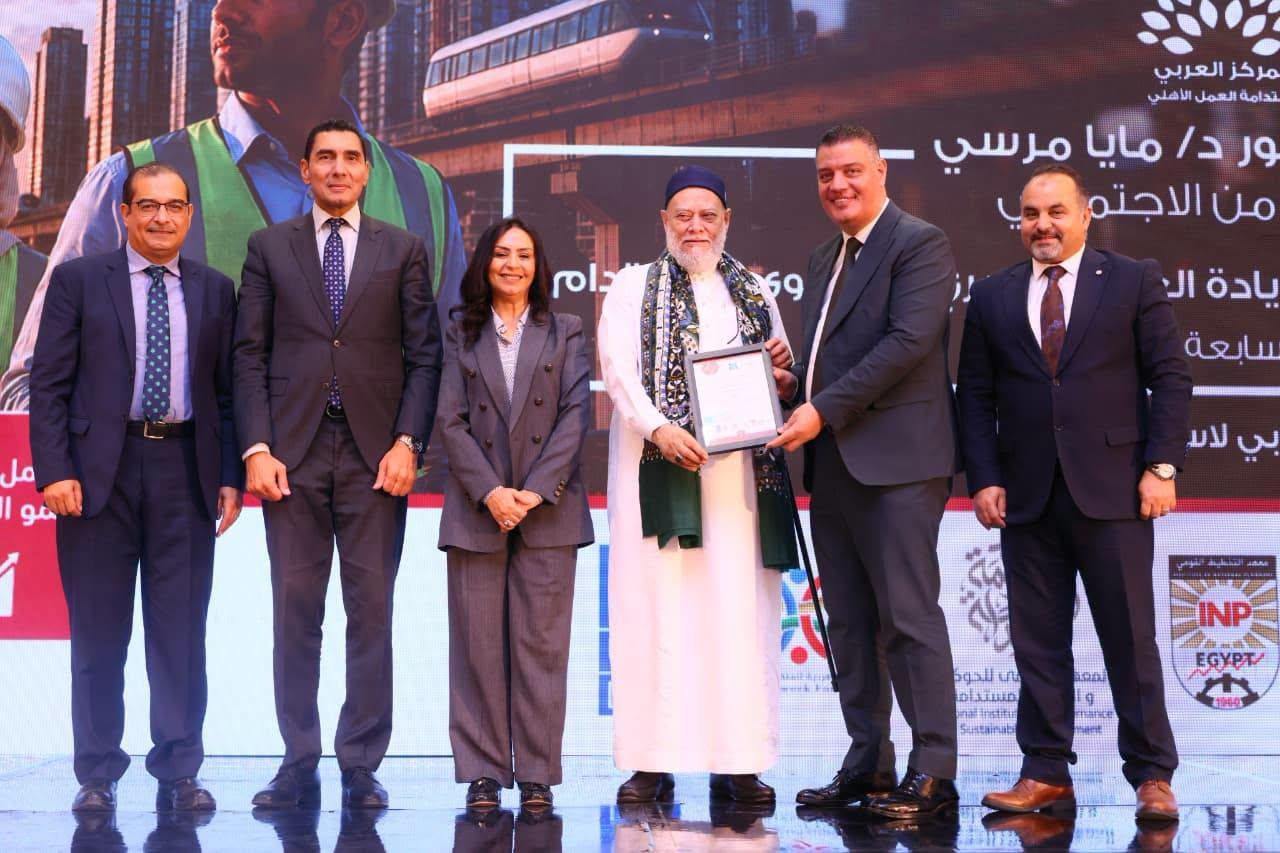
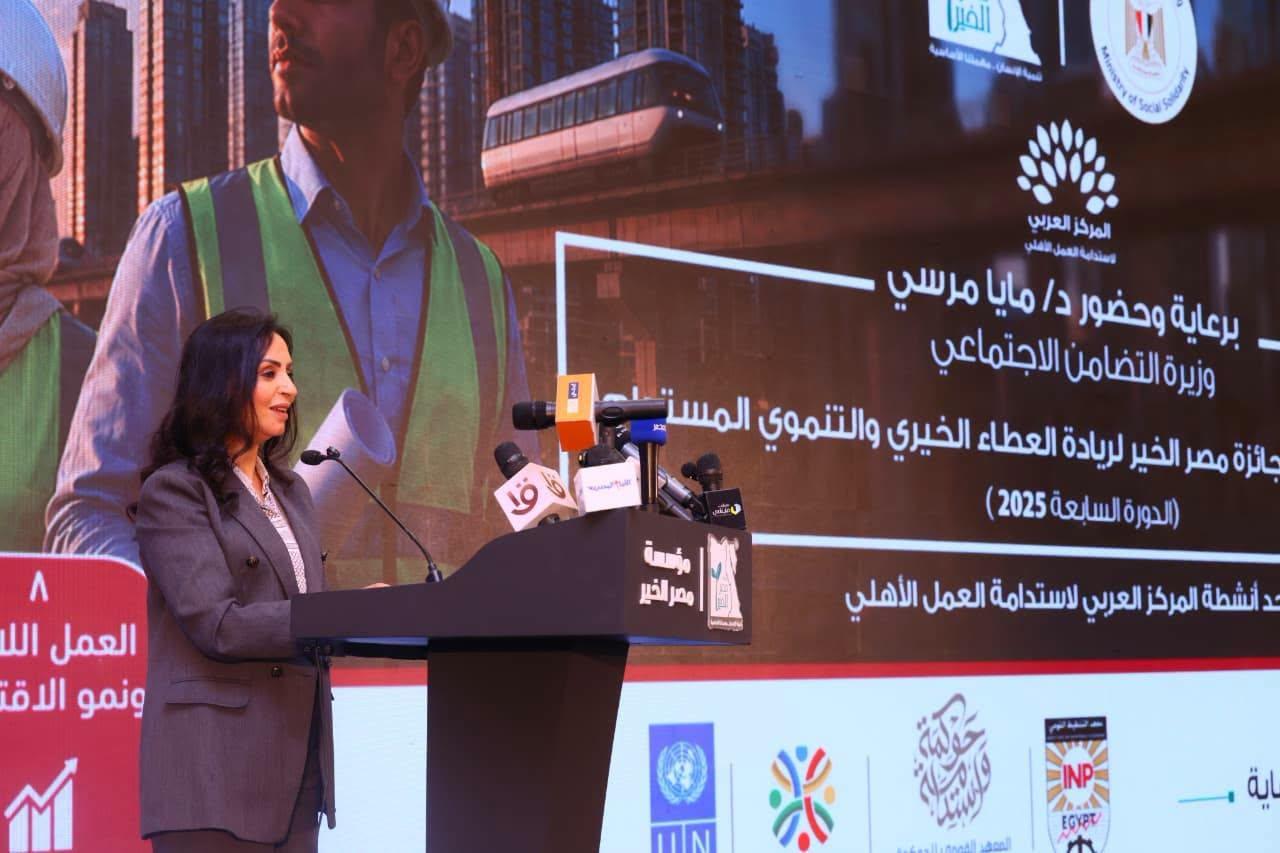
The Minister of Social Solidarity witnesses the closing ceremony of the seventh session of the Misr Al-Khair Award for Leadership in Charitable Giving and Sustainable Development, in the presence of the Minister of Youth and Sports.

News Details
Sep 29, 2026
Statement issued by the Ministry of Social Solidarity:
Dr. Maya Morsi, Minister of Social Solidarity, witnessed the closing ceremony of the seventh session of the Misr Al-Kheir Award for Leadership in Charitable and Sustainable Development Giving, in the presence of Mr. Gohar Nabil, Minister of Youth and Sports, Dr. Ali Gomaa, Chairman of the Board of Trustees of the Misr Al-Kheir Foundation, Professor Ayman Abdel Mawjoud, Permanent Undersecretary of the Ministry of Social Solidarity, Professor Ghada Tawfiq, Deputy Governor of the Central Bank, and Professor Mohamed Rifai, CEO of the Misr Al-Khair Foundation, And a group of public figures.
The Minister of Social Solidarity expressed her honor to participate in the celebration of the seventh session of the “Misr Al Kheir Award for Pioneering Charitable and Sustainable Development Giving,” and to be among this gathering of civil society institutions, development partners, experts, and workers who have chosen for themselves a real role in people’s lives. She thanked the Misr Al Kheir Foundation and the Arab Center for Sustaining Civil Work, for sustaining this diligent work first, and for honoring Secondly, those who have influence and influence in this society, with appreciation extending to everyone who contributed to the continuation and development of this award over the course of seven cycles.
Dr. Maya Morsi confirmed that this award assigns great value to itself, starting from its very name, “Charitable and Sustainable Development Giving.” Because giving in its modern concept has gone beyond the scope of providing assistance, and from here comes the value of civil work in Egypt. Civil work in Egypt has become an essential part of the development and social protection system, and today we have on the national map of civil work about 36 thousand associations and institutions, a number that expresses achievement. But the real achievement is the major transformation that the civil work file has witnessed over the past years. From the existence of dispersed entities operating without a unified classification framework, to a more organized system based on four clear axes: community support, partnership for development, governance, and transparency.
The Minister of Social Solidarity explained that the process of reconciling the status of associations had been completed in accordance with the Law Regulating the Practice of Civil Work No. 149 of 2019, to reach a more accurate base for the active entities on the ground, and our goal was clear: to protect the freedom of civil work, and at the same time; To build a sector capable of working efficiently, capable of managing resources, and also able to demonstrate its impact. Trust in civil society is built with governance, transparency, and results, and Egypt today views civil society as a partner in implementing development.
The numbers confirm the size of this partnership. The total annual funding for civil society work in 2026 reached about 12.714 billion pounds, while the cumulative funding volume over twelve years exceeded 52.5 billion pounds.
Through the Fund to Support Projects of Associations and NGOs alone, the value of grants amounted to about 4.9 billion pounds, through which 20,188 projects were financed, implemented by 11,373 associations and NGOs. Behind every number is a project, and behind every project is a village, family, child, woman, or young man in whose life something changed.
The Minister of Social Solidarity indicated that the philosophy of this award is consistent with the vision of the Ministry of Social Solidarity for civil work as an authentic partner in the development process. Civil associations and institutions, with their proximity to local communities and their ability to read their needs, have an important role in transforming sustainable development goals from major headlines into programs, projects, and tangible results in villages, cities, and governorates.
Also, the idea adopted by the award to allocate each session to one of the sustainable development goals gains special importance in this context. Because it helps to read civil work from a different angle, as goals such as eradicating poverty, health, education, economic empowerment, decent work, and development do not proceed separately in people’s lives, and are not carried by an institution or ministry alone, and this is precisely the direction on which the Ministry of Social Solidarity is working; The social protection system that today supports millions of families is working in parallel to find another path towards empowerment, work and production, in close cooperation with civil society.
The Minister of Social Solidarity said that Egypt is full of a long history, a wide network of institutions, and experiences that deserve to be told, and in the midst of this impactful competition; We want to see civil society more capable of using data, more capable of measuring impact, more daring in innovation, and more willing to enter into real partnerships with the private sector, universities, research centers, and international institutions. What we need in the next stage is to add to the power of giving the power of knowledge, to the enthusiasm of professionalism, and to the speed of response and sustainability.
Dr. Maya Morsi stressed that the Ministry of Social Solidarity will continue to support serious civil society institutions and be a partner with them in developing their capabilities, opening broader spaces for work and integration, and in building a strong, organized, transparent civil society system capable of reaching the citizen and making a real impact in his life.
The Minister of Social Solidarity extended her greetings to every institution that applied for the award, to every experience that has reached its various stages, and to the winners whom we celebrate today. She also renewed her thanks to the Misr El Kheir Foundation for the continuation of this award, hoping that the coming sessions will bring more experiences that change people’s lives, as this is the giving we need. Giving reaches a person, builds his ability, and leaves behind a lasting impact.
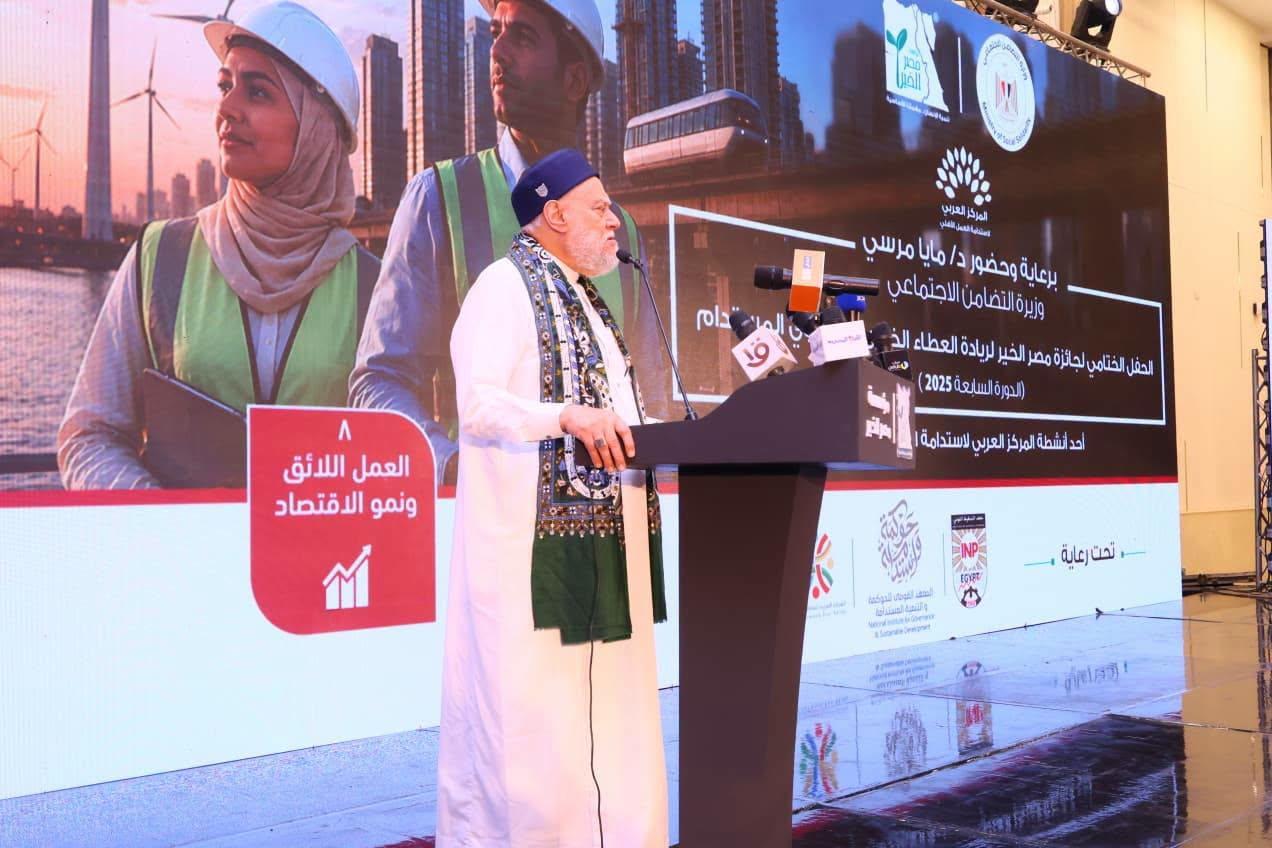
The Chairman of the Board of Trustees of Misr Al-Khair said: “We continue to transform ideas and knowledge into a living reality and a benefit that accrues to creation. This is a type of architecture of the world that God Almighty has commanded us to do. Our primary goal is architecture and reconstruction. God Almighty said, ‘He created you from the earth and settled you in it,’ meaning He asked you to build it, and He hated destruction, corruption, and people’s oppression of one another, and He set rules for that.” Firm and strict. The work of these institutions regarding architecture is an excuse against all destruction, bombing, and corruption on earth. Our goal is architecture, not destruction.
He added: There are sustainable development goals issued by the United Nations and agreed upon by more than 183 countries, and they have been set for the year 2030, and we in Egypt have been inspired by initiatives that serve decent work and sustainable development. The idea is how to transform what is in a person from an idea into reality, work and knowledge that serves people, and this is the secret of the success of “Misr Al-Khair”.
He continued: In this celebration, we gather in a way that encourages and calls for goodness, in accordance with the Almighty’s saying, “And cooperate in righteousness and piety.”